Stegosaurus: The Plated Defender
With its distinctive double row of plates running down its back and formidable spiked tail, Stegosaurus is one of the most recognizable dinosaurs ever discovered. This herbivorous giant roamed the Late Jurassic period, using its unique defensive features to survive in a world dominated by fearsome predators like Allosaurus.
When Did Stegosaurus Live?
Stegosaurus lived during the Late Jurassic period, approximately 155 to 150 million years ago. It shared its world with massive sauropods like Brachiosaurus and apex predators like Allosaurus. Stegosaurus fossils are most commonly found in the Morrison Formation of the western United States.
Quick Facts
- Period: Late Jurassic (155-150 million years ago)
- Location: Western North America (Colorado, Wyoming, Utah)
- Length: 30 feet (9 meters)
- Height: 14 feet tall at the hips (plates included)
- Weight: 5-7 tons
- Diet: Herbivore (plant-eater)
The Mysterious Plates
The most famous feature of Stegosaurus is its row of large, bony plates running along its back. These plates, which could reach up to 2 feet tall and wide, have puzzled scientists for over a century. What were they for?
Originally thought to be armor, the plates were actually quite thin and contained numerous blood vessels, suggesting they served a different purpose. Current theories include:
- Temperature regulation: The plates may have acted like solar panels, absorbing heat when the dinosaur was cold and releasing it when overheated
- Display: Brightly colored plates could have been used to attract mates or intimidate rivals
- Species recognition: Different plate arrangements helped Stegosaurus identify members of their own species
The plates likely served multiple functions, with display and thermoregulation being the most probable primary uses.
The Thagomizer: Nature's Weapon
While the plates may not have been armor, Stegosaurus had a devastating weapon at the end of its tail—four long, sharp spikes paleontologists nicknamed the "thagomizer." This name comes from a 1982 Far Side cartoon by Gary Larson, and it stuck so well that it's now the informal scientific term!
These tail spikes, which could reach 3 feet in length, were wielded like a medieval mace. Stegosaurus could swing its muscular tail with tremendous force, driving the spikes into attacking predators. Evidence of this defensive weapon's effectiveness has been found on Allosaurus fossils, showing wounds that perfectly match Stegosaurus tail spikes.
A Deadly Defense
Studies of Stegosaurus tail vertebrae show they were incredibly flexible, allowing for a wide range of motion. This meant Stegosaurus could deliver powerful, precise strikes to the sides or even directly behind it. For predators like Allosaurus, attacking a Stegosaurus was a dangerous gamble that could result in crippling or fatal injuries.
The Brain Size Mystery
Stegosaurus is famous (or infamous) for having one of the smallest brain-to-body ratios of any dinosaur. Its brain was roughly the size of a walnut—about 2.8 ounces—in a body that weighed several tons. This led to the persistent myth that Stegosaurus had a "second brain" in its hips to control its back legs.
This myth is now thoroughly debunked. The cavity near the hips that scientists once thought contained a second brain was actually a glycogen body—a structure found in modern birds that stores energy. Stegosaurus managed just fine with its small brain, which was perfectly adequate for its needs as an herbivore.
Diet and Lifestyle
Stegosaurus was a low-browsing herbivore, feeding on ferns, cycads, and other low-growing plants. Its small head and weak jaws suggest it was selective about what it ate, choosing only the most nutritious and easily digestible vegetation.
With its front legs being much shorter than its back legs, Stegosaurus had a distinctive sloping posture that positioned its head close to the ground—perfect for browsing on low vegetation. Some scientists speculate it may have been able to rear up on its hind legs to reach higher plants, using its tail as a tripod for support.
Discovery and Scientific Impact
The first Stegosaurus fossils were discovered in 1877 by paleontologist Othniel Charles Marsh during the famous Bone Wars. Since then, numerous specimens have been found, making Stegosaurus one of the best-understood dinosaurs. It has become a cultural icon, appearing in countless books, movies, and museums around the world.
Stegosaurus is the state fossil of Colorado, where many of the best specimens have been found. The most complete skeleton ever discovered, nicknamed "Sophie," is on display at the Natural History Museum in London and is about 80% complete.
Bring Stegosaurus to Your Desktop
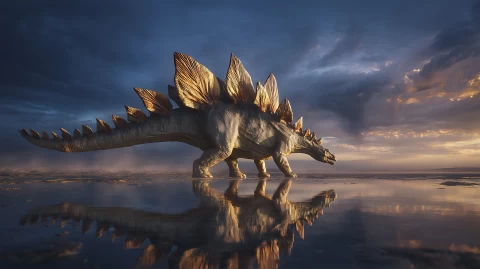
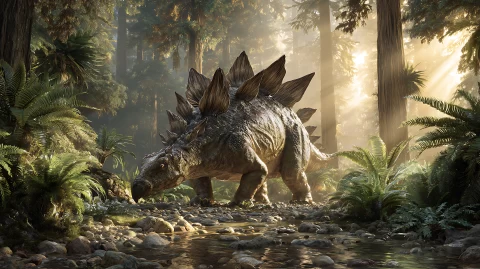
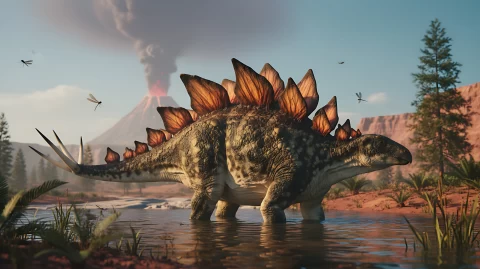
Experience the distinctive plated defender with our stunning 4K wallpaper.
Conclusion
Stegosaurus stands as one of the most iconic dinosaurs of all time. With its distinctive plates, powerful tail spikes, and peaceful herbivorous lifestyle, it represents the incredible diversity of defensive strategies that evolved during the Age of Dinosaurs. Though it may not have had the largest brain, Stegosaurus was perfectly adapted for survival in the competitive ecosystems of the Late Jurassic—and its success is proven by its status as one of the most recognizable prehistoric creatures in popular culture.