Dilophosaurus: The Double-Crested Hunter
With its distinctive double crest and sleek build, Dilophosaurus was one of the largest predators of the Early Jurassic period. While popular culture has taken liberties with its appearance, the real Dilophosaurus was a formidable hunter that helped establish the dominance of theropod dinosaurs.
When Did Dilophosaurus Live?
Dilophosaurus lived during the Early Jurassic period, approximately 193 million years ago. This was shortly after the Triassic-Jurassic extinction event that cleared the way for dinosaurs to become the dominant land animals.
Quick Facts
- Period: Early Jurassic (193 million years ago)
- Location: Arizona, USA
- Length: 20 feet (6 meters)
- Height: 5 feet tall at the hips
- Weight: 800-1,000 pounds
- Diet: Carnivore
The Famous Double Crest
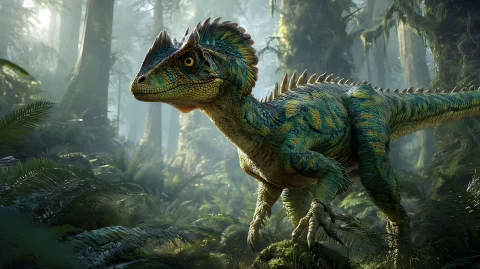
Dilophosaurus means "double-crested lizard," referring to the two thin, rounded crests running along the top of its skull. These crests were likely too fragile for combat and were probably used for display—perhaps to attract mates or establish dominance within the species.
The crests were made of bone and may have been brightly colored in life, making Dilophosaurus instantly recognizable to other members of its species. This kind of sexual display structure is common in modern animals, from birds to mammals.
Separating Fact from Fiction
Dilophosaurus gained fame in the 1993 film Jurassic Park, but the movie version bears little resemblance to reality. The real Dilophosaurus was much larger, lacked a neck frill, and couldn't spit venom. These were creative additions for the film and have no basis in fossil evidence.
In reality, Dilophosaurus was a significant predator—one of the largest carnivores of its time. At 20 feet long and weighing nearly half a ton, it was a formidable hunter capable of taking down substantial prey.
Hunting and Diet
Dilophosaurus had sharp, blade-like teeth and powerful jaws, but its skull was more lightly built than later large theropods. This suggests it may have hunted smaller, more agile prey or used slashing attacks rather than bone-crushing bites.
Some paleontologists believe Dilophosaurus may have also scavenged, using its keen senses to locate carcasses. Its long, flexible neck would have been useful for reaching into carcasses and stripping meat from bones.
Bring Dilophosaurus to Your Desktop
Experience the distinctive double-crested predator with our stunning 4K wallpaper.
Conclusion
Dilophosaurus represents an important chapter in theropod evolution. As one of the earliest large predatory dinosaurs, it helped pave the way for the giants that would follow. While Hollywood may have exaggerated its features, the real Dilophosaurus was impressive enough on its own—a distinctive, successful predator that thrived in the dawn of the Jurassic age.